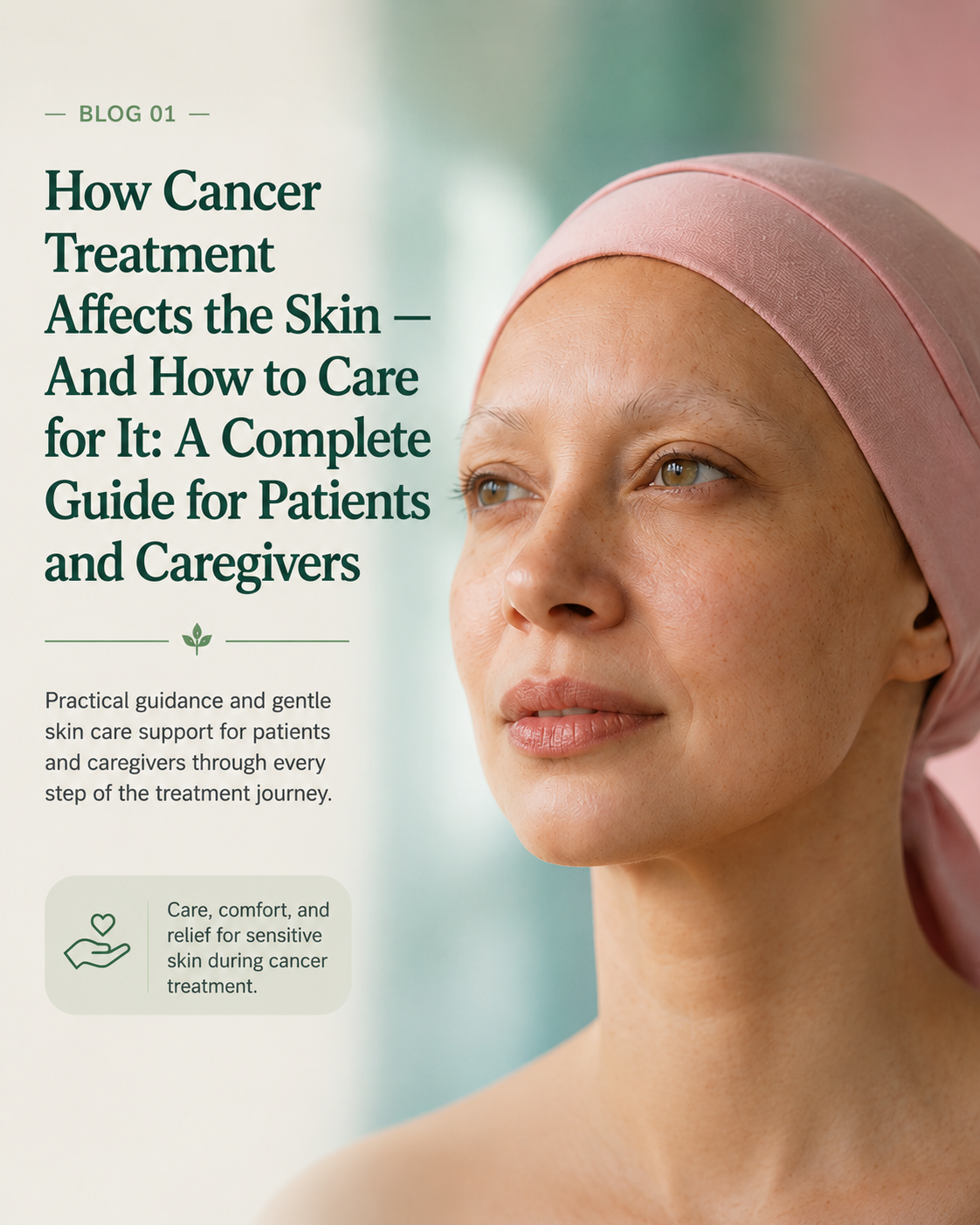
What to expect during chemotherapy, caregiving during cancer treatment, supporting a loved one through treatment, delicate skin care routine, botanical body moisturizer, sensitive-feeling skin, daily care for dry delicate skin, gentle body care during periods of increased sensitivity | Read time: 9 min
Disclaimer: This article is for general informational purposes only and does not constitute medical advice. Always consult your oncology care team before introducing any new skin care product or changing your routine during cancer treatment, including radiation therapy.
No matter how many conversations you have with the oncology team before treatment begins, there are things you will only understand once you are living through them. The difference between what a brochure describes and what a treatment day actually feels like — for the patient and the caregiver — can be enormous.
This guide takes an honest look at ten physical side effects that cancer treatment — chemotherapy, radiation therapy, or both — can cause, with the goal of helping caregivers feel more prepared, more effective, and less alone. For each, we offer a practical perspective on what helps. Skin-related side effects, in particular, are addressed with specific guidance on botanical care.
1. Fatigue — Not Just Tiredness
Chemotherapy-related fatigue is unlike anything most people have experienced before. It is bone-deep, does not improve with rest, and can make even small tasks feel monumental. On heavy fatigue days, gentle presence and taking tasks off their plate matters far more than activity or encouragement to push through.
2. Nausea and Appetite Changes
Anti-nausea medications have improved significantly, but appetite can still be deeply disrupted. Food aversions can develop suddenly — favorites become intolerable. Small, frequent meals of bland, easy-to-digest foods help. An aromatherapy inhaler with calming essential oils is something many patients find useful for managing nausea at home and during treatment sessions. The oncology team or dietitian can provide regimen-specific nutritional guidance.
3. Chemotherapy Skin — Dryness and Sensitivity
Chemotherapy disrupts the regeneration of skin cells, weakening the protective barrier. The result is accelerated moisture loss, increased sensitivity to products and temperatures, peeling, and a lower threshold for irritation from everyday items.
Starting a gentle skin care routine early — before symptoms become severe — is one of the most proactive steps a caregiver can take. The key principles for chemotherapy skin: lukewarm water for all washing, botanical moisturizer applied to damp skin, fragrance-free formulas on the face and sensitive areas, daily lip care, and foot cream if neuropathy is present. Natural plant oils like Jojoba and Sweet Almond — combined with Calendula Lavender, Peppermint, Arnica and Glycerin — are commonly used in gentle body moisturizers designed for delicate, easily stressed skin.
4. Radiation Dermatitis — Skin in the Radiation Field
For patients undergoing radiation therapy, the skin in the treated area develops its own specific reaction. It can become red, dry, tender, and sensitive — similar in sensation to a burn. This is radiation dermatitis, and it is one of the most common and impactful skin-related side effects of radiation treatment.
Many caregivers look for gentle, botanical body care options that can be incorporated into a consistent daily skin care routine during periods of heightened skin sensitivity. Botanicals-based formulas are widely appreciated in sensitive-skin body care routines for their rich moisturizing feel and comforting cosmetic experience on delicate-feeling skin.
A rich botanical moisturizer — applied as part of a consistent daily body care routine — can help leave skin feeling soft, conditioned, and comfortably cared for. Continuing a gentle moisturizing routine consistently can help maintain skin comfort and softness during periods when skin feels especially delicate and dry.
PhysAssist® Oncology Cream® with Botanicals for Body is a moisturizer thoughtfully crafted for delicate, easily stressed skin. Formulated with ingredients such as Sweet Almond Oil, Jojoba Oil, Calendula, Glycerin, Lavender, Arnica, Peppermint and Vitamin E, it provides comforting daily moisture and a soft botanical aromatic experience as part of an everyday self-care routine.
5. Hair Loss
Not all chemotherapy causes hair loss, but many regimens do — typically beginning within two to four weeks. It can affect the scalp, eyebrows, eyelashes, and body hair. The emotional impact is significant and often underestimated. The scalp, once exposed, requires dedicated gentle care: sun protection when outdoors, and a fragrance-free hydrating formula to maintain scalp comfort.
6. Nail Changes
Nails are made of fast-dividing cells and are affected by chemotherapy — changes include brittleness, discoloration, and horizontal lines (Beau's lines). Keep nails trimmed short, avoid gel and acrylic manicures during treatment, and wear gloves during tasks involving prolonged water or chemical exposure.
7. Peripheral Neuropathy — Tingling in Hands and Feet
Tingling, numbness, or burning sensations in the hands and feet result from chemotherapy's effect on the peripheral nerves. Balance can be affected, making fall prevention important: non-slip mats, good lighting, and footwear with grip all help. A botanical foot cream with Menthol, Lavender, and Arnica can become part of a comforting daily self-care routine for feet and legs that feel tired, dry, or in need of extra attention.
8. Cognitive Changes — Chemo Brain
Difficulty concentrating, memory lapses, and mental fog are real and common during treatment. A shared calendar, patient repetition of information, and avoiding complex decision-making requests on treatment days all reduce the cognitive load for the patient.
9. Mouth Sores and Oral Changes
Mucositis — inflammation and sores in the mouth and throat — can make eating, drinking, and speaking painful during certain chemotherapy regimens. Gentle, alcohol-free mouth rinses and soft foods help. The oncology team will provide specific oral care guidance tailored to the treatment protocol.
10. Disrupted Sleep
Disrupted sleep is extremely common — driven by physical discomfort, anxiety, and medication effects. An intentional evening routine can help signal that the day is ending: a few minutes of applying a comforting botanical body cream with aromatic ingredients such as Lavender can become part of a gentle evening self-care ritual. Simple, consistent, and something a caregiver can help with.
Supporting the Whole Person — and the Role of Botanical Skin Care
Among all of the side effects listed above, skin-related changes are among those where a caregiver's daily actions make the most direct and tangible difference. The skin can be cared for — every day, with gentle hands and the right botanical formulas — in a way that both helps maintain everyday skin comfort and communicates love and presence.
PhysAssist ® Oncology Cream® line of products provide gentle daily body care and comforting moisture for sensitive-feeling skin.
Choosing the right botanical skin care products during oncology treatments is an act of care that goes beyond comfort — it helps maintain soft, moisturized, comfortable-feeling skin, and creates daily moments of normalcy. PhysAssist ® Oncology Cream® products are thoughtfully formulated with natural plant oils and botanical ingredients designed to provide gentle daily moisture and comforting cosmetic care.
Explore PhysAssist: PhysAssist Oncology line — botanically crafted skin and body care for delicate, dry, and sensitive-feeling skin. Daily moisturizers, botanical body creams, foot care, lip balms, and body wash — thoughtfully crafted daily care for skin that needs extra attention. Visit PhysAssist.com to learn more.